Biosecurity
Biosecurity helps to protect the region’s natural environment, agriculture, tourism, community amenity, and local economy from invasive pests and diseases.
Threats such as the Polyphagous Shot-Hole Borer (PSHB) can kill a wide range of trees, reducing urban canopy cover, damaging parks and reserves, impacting biodiversity, and damaging local horticultural industries. PSHB has already caused significant tree losses in Perth and Peel region and affects more than 500 host plant species.
Similarly, H5 avian influenza (bird flu) poses a serious threat to native wildlife, migratory birds, poultry industries, and environmental values.
For more information on these specific threats, please visit the relevant sections below.
Polyphagous shot hole borer
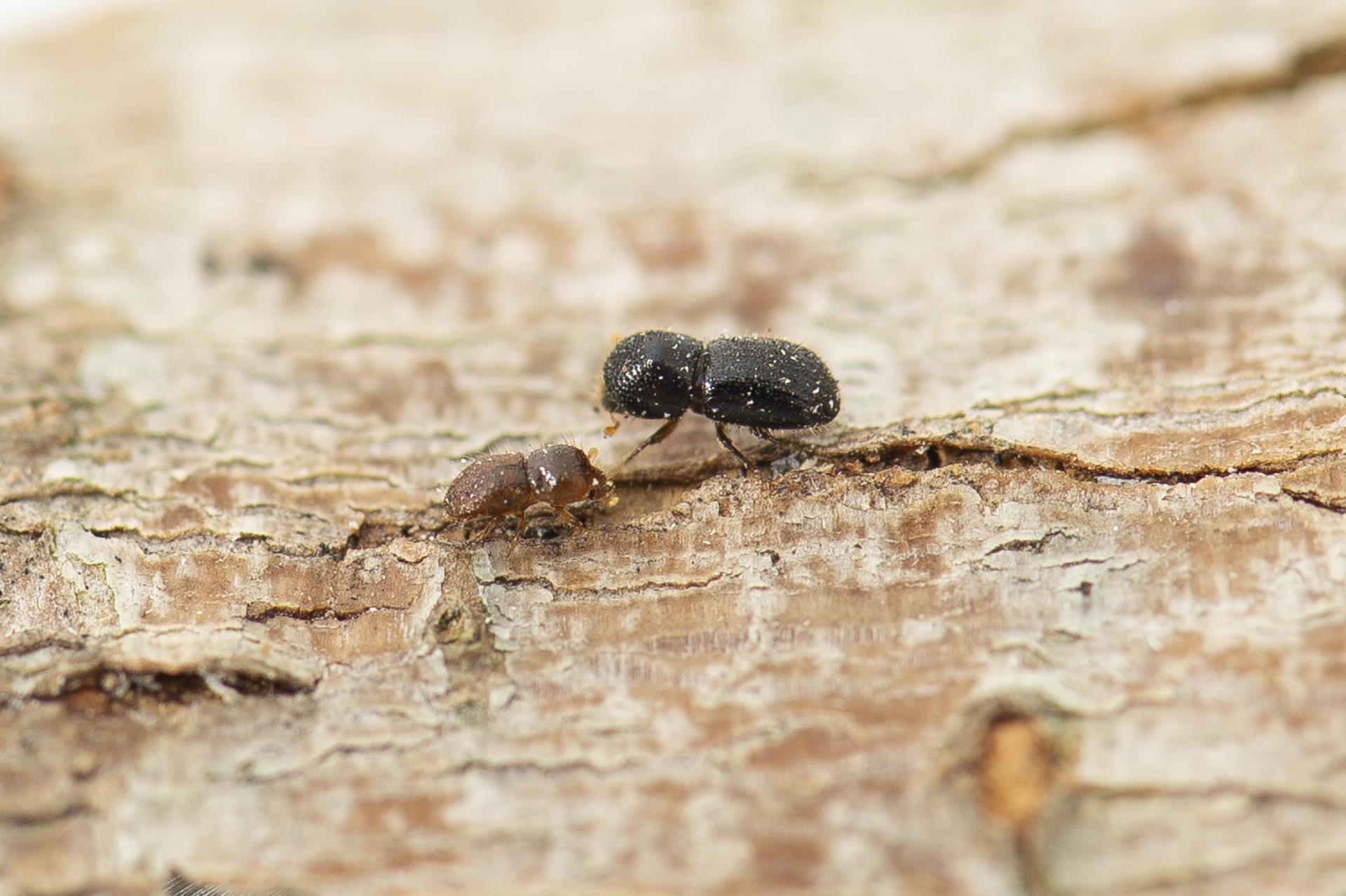
Polyphagous shot-hole borer (PSHB, Euwallacea fornicates) is a beetle native to Southeast Asia. The beetles attack a wide range of plants by tunnelling into trunks, stems and branches.
PSHB cultivates a fungus (Fusarium) inside the host tree as a food source. In susceptible trees, the fungus kills vascular tissue causing Fusarium dieback and tree death.
To date, PSHB has only been found in the Perth metropolitan area. The Department of Primary Industries and Regional Development (DPIRD) has installed traps in Harvey, Mt Barker, Manjimup and Bunbury. To date, these traps have not returned any positive PSHB detections.
Common signs to look for
Below are the most common signs to look for:
- Beetle entry/exit holes - approximately the size of a ballpoint pen tip.
- Galleries - when pruning branches or inspecting fallen branches, check for evidence of galleries caused by the tunnelling action of PSHB beetles.
- Discoloration/staining - this is caused by the fungus.
- Gumming - thick resin or sap.
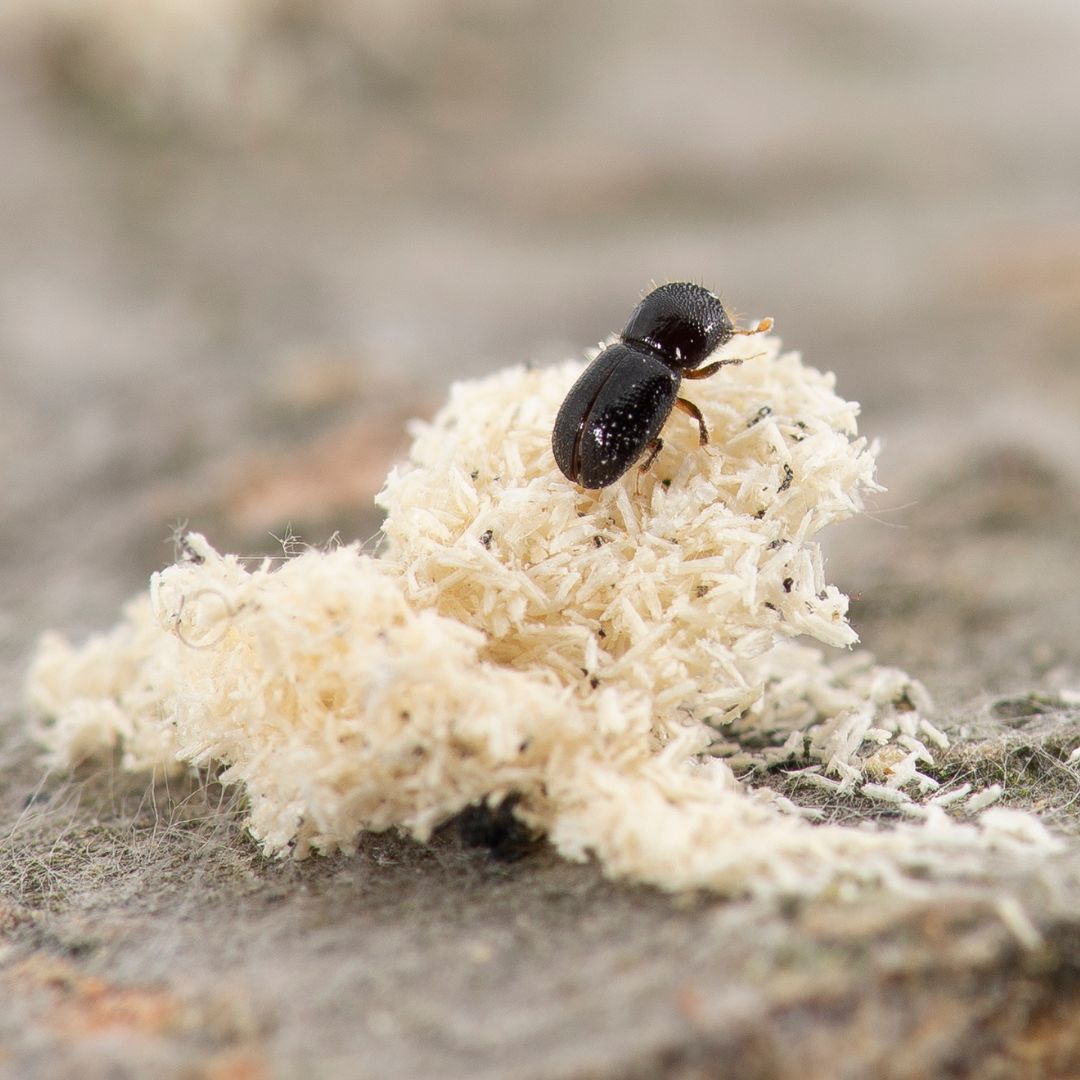
- Frass - produced by the beetles tunnelling, frass may be seen on the tree exterior. This can indicate a high level of infestation.
- Sugar volcanoes - crystalline foam is exuded from entry/exit holes.
- Dieback and tree death - the fungus disrupts the tree vascular symptom causing dieback and death.
For more information on symptoms visit the Department of Primary Industries and Regional Development website >>
Favourite host tree species
PSHB particularly favours the Box Elder Maple (Acer negundo). Other popular reproductive hosts (susceptible trees) include Plane (Platanus), Poplars (Populus), Oak (Quercus), Avocado (Persea), Fig (Ficus), Black Locust (Robinia), Willow (Salix), Mulberry (Morus), Poinciana (Delonix regia) and Coral Tree (Erythrina).
A list of host tree species in WA where the beetles have successfully reproduced is accessible here.
DPIRD are requesting the location of all Box Elder Maple trees (Acer negundo) is reported to assist with ongoing monitoring.
What to do
There are no known effective chemical treatments for PSHB; therefore, early diagnosis and immediate removal or pruning of affected trees is critical to limiting PSHB spread and reducing future effects on surrounding trees.
Residents are encouraged to inspect backyard trees for suspected borer damage and should report to DPIRD’s Pest and Disease Information Service on (08) 9368 3080, email padis@dpird.wa.gov.au or via the MyPestGuide Reporter app. For more information on PSHB visit www.agric.wa.gov.au/borer
Quarantine Area
A Quarantine Area Notice (QAN) restricting the movement of wood and plant material has been put in place to help stop the spread of PSHB.
The QA was extended on 6 September 2024 to cover the entire Perth Metropolitan area, extending across 30 local government areas.
The QA encompasses two zones.
- Zone A covers an area with high numbers of infested plants and has intensive control activities, such as plant removal, underway. This zone has more restrictions on the movement of high-risk materials.
- Zone B covers an area with fewer to no infested plants and has heightened surveillance underway to identify and control any new infestations discovered. This zone will help create a buffer between areas of high infestations and the rest of WA to further protect our flora.
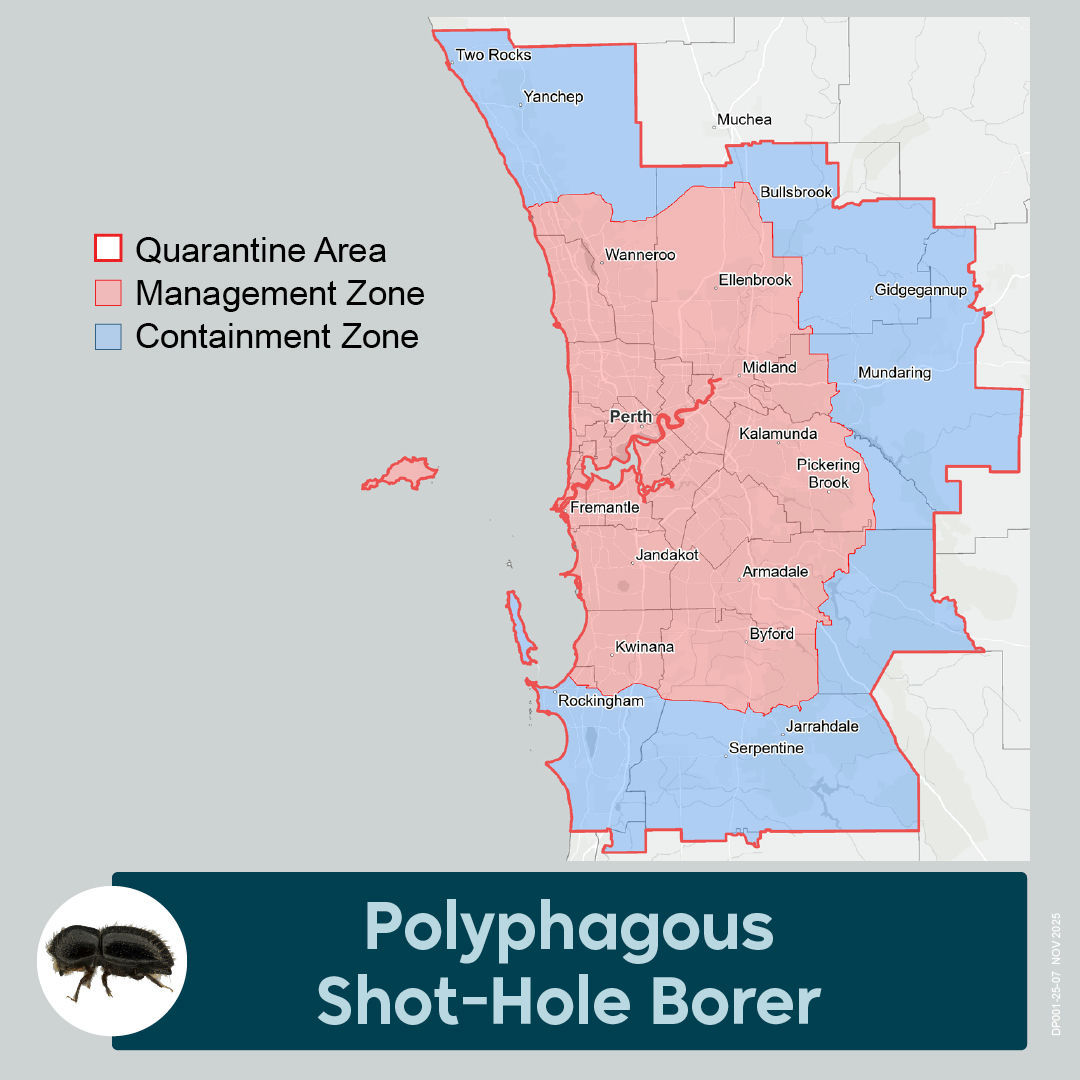
The City of Busselton is outside the quarantine area. Residents and visitors should not bring untreated or unseasoned wood and plant materials from inside the quarantine area to the South West.
What does it look like?
Find some imagery of the Polyphagous shot-hole borer below.

H5 Avian Influenza (bird flu)
H5 bird flu is a serious strain of bird flu which has spread rapidly, in birds and mammals, around the world. H5 bird flu has now been confirmed in small numbers of migratory seabirds from Australian coastal areas.
What is H5 bird flu?
H5 bird flu is a serious and highly contagious strain of bird flu that has moved quickly around the world, Australia being the last continent to receive this strain.
Wild, farmed, and pet birds can all catch bird flu, as well as some mammals. Overseas H5 bird flu has infected more than 560 wild bird species and more than 100 mammalian species. Affected mammals are mainly marine mammals and bird-eating scavengers, but cases have also been detected in a range of animals such as, dairy cattle, cats, dogs, goats, alpacas and pigs. There is currently no treatment for impacted animals.
Migratory wild birds can carry bird flu long distances, making them the primary pathway for H5 bird flu to enter Australia.
How it spreads
H5 bird flu spreads between animals via infected droppings, contaminated environments, and close contact.
Human infections are rare and typically occur after close contact with infected birds, animals, or contaminated environments.
While the risk to people is low, it’s still important to avoid contact with sick or dead birds and animals.
Responding to an outbreak
Australia has well-established national response arrangements in place to respond to emergency animal diseases, including bird flu.
The Australian Government is working closely with state and territory governments, industry, non-government organisations, communities and businesses to respond to bird flu. Early detection and working together are important.
The City of Busselton will support these agencies as required to help protect our wildlife and community.
Signs to watch for in birds and mammals
Look for unusual behaviours and symptoms, such as:
- difficulty moving such as droopy wings, dragging legs, and lying down
- unusual behaviour or posture - twisting of the neck, paralysis, staggering
- head or limb swelling
- tiredness/lethargy or reluctance to walk, eat, or drink
- respiratory signs such as panting, nasal discharge, or sneezing
- diarrhoea
- sudden death, or deaths of multiple birds.
What to do if you see sick birds or mammals
Bird flu is serious and needs to be reported if you suspect it. DO NOT rescue, touch, or move sick or dead birds or mammals with suspected bird flu.
We are asking the public to:
- Avoid contact with sick or dead wildlife and their environment. Do not allow pets to touch or eat sick or dead wildlife.
- Record what you see, the location the animal was found, and take photos or video.
- Report any unusual sickness or multiple deaths in wildlife via the Emergency Animal Disease Hotline on 1800 675 888.
Reporting will alert authorities to the event so they can evaluate the need for diagnostic testing or other investigation.
Further information
For further information on H5 bird flu please visit the Department of Agriculture, Fisheries and Forestry (DAFF) website.